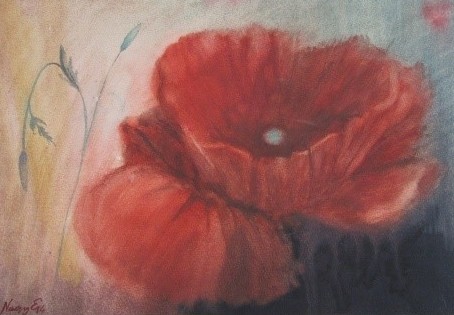
GLIMMERING REALITY
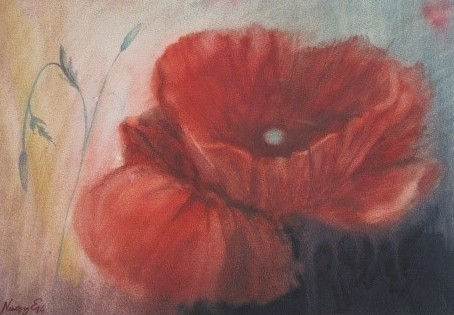
A commemorative exhibition of the painter Ernő Nagy (Felnémet, 1926 – Eger, 2017) on the centenary of his birth
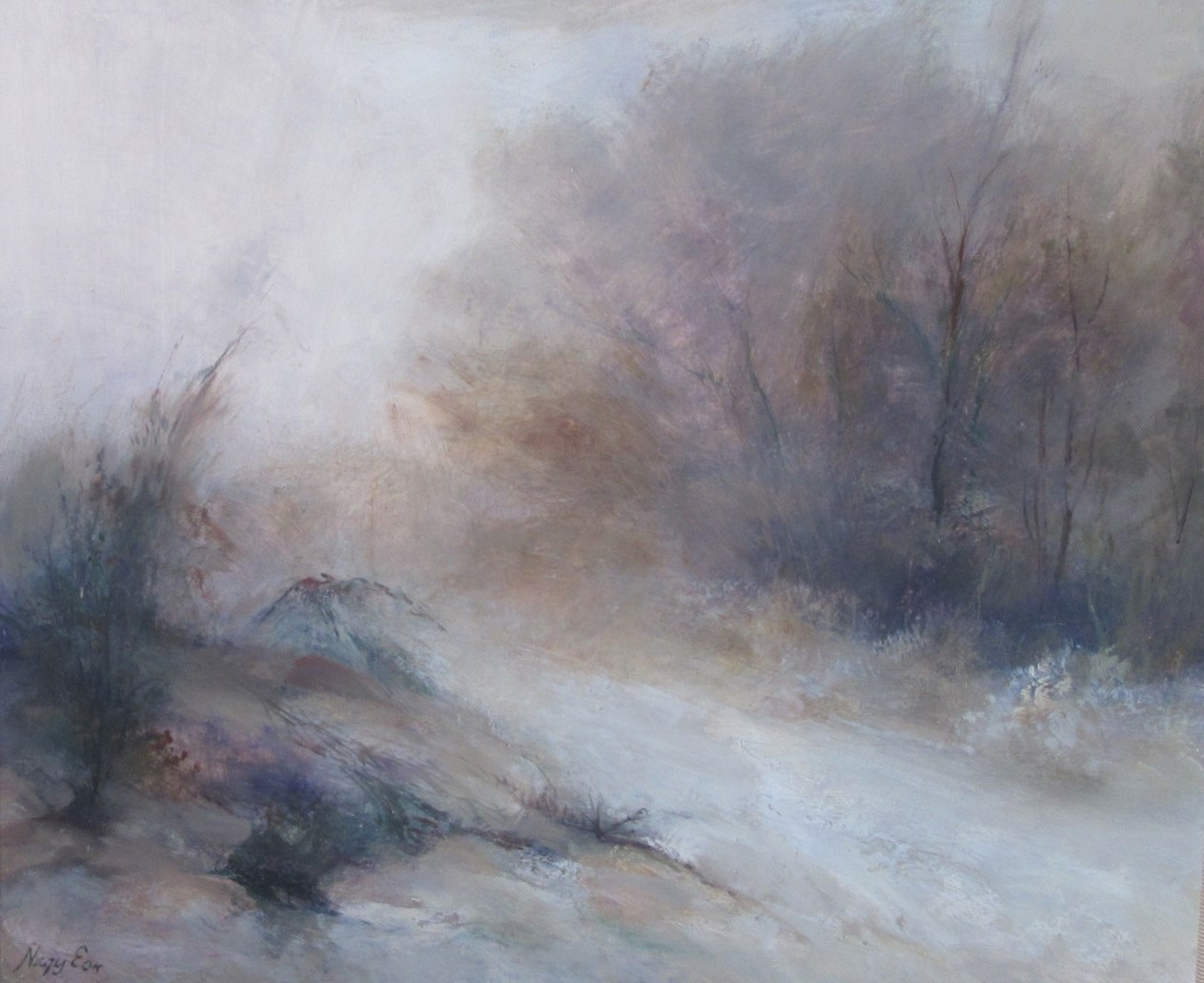
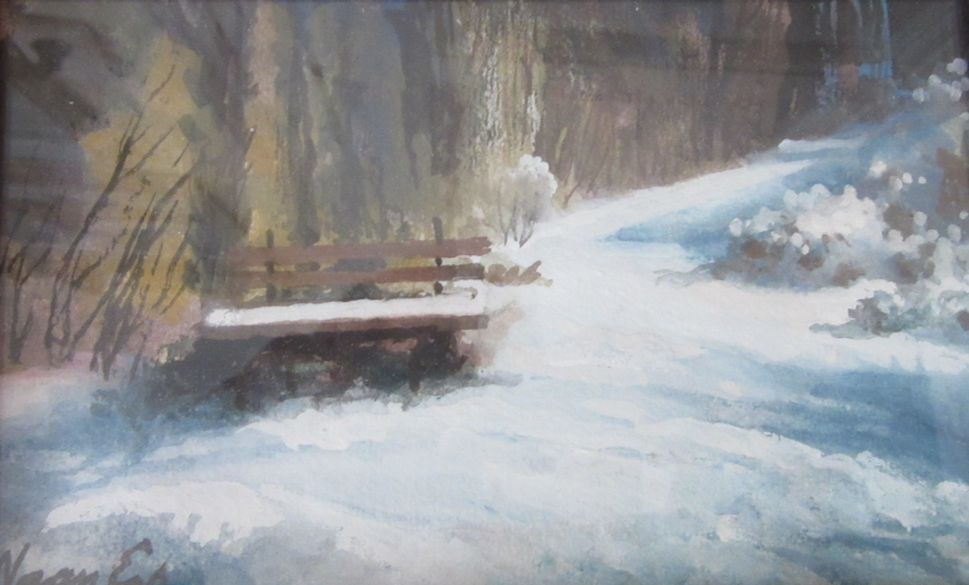
There are people whose lives are defined by a kind of longing: a longing for beauty, and for the world and life to form a harmonious whole. Born a hundred years ago, the painter and college professor Ernő Nagy lived in Eger. His paintings, watercolors and drawings, focusing on natural and artistic beauty, are shrouded in quiet melancholy. Most of his attractive oeuvre is about Eger (its baroque splendor) and the landscape surrounding the city – mountains, valleys, babbling streams –, the change of seasons, the micro-existence of trees, bushes and flowers, the effervescence of life.
The painter Ernő Nagy is not only connected to our city by the proximity of his birthplace – he was born in Felnémet, a neighborhood of Eger – but also by his almost seven decades of artistic and pedagogical work. After graduating, he lived in Eger from 1953 and taught at the Drawing Department of the Eger Teacher Training College from 1958 to 1986: he was the head of the department from 1980. As a respected member of the city's artistic community, he was awarded the title of Honorary Citizen of the City of Eger in his old age.
On the occasion of the centenary of his birth, we are organizing a commemorative exhibition of his collected works, entitled Glimmering Reality (“Derengő valóság”) in the Ziffer Sándor Gallery, fine arts exhibition area of the Dobó István Castle Museum. In addition to the legacy preserved by the family, some of his paintings are kept by the Dobó István Castle Museum – in its core collection or as a deposit – but the people of Eger also gladly bought his paintings. The city and county governments have paid tribute to his work for decades, as a large part of Ernő Nagy's attractive oeuvre is about Eger and the surrounding landscape. It has a lyrical tone, and a documentary value as well.
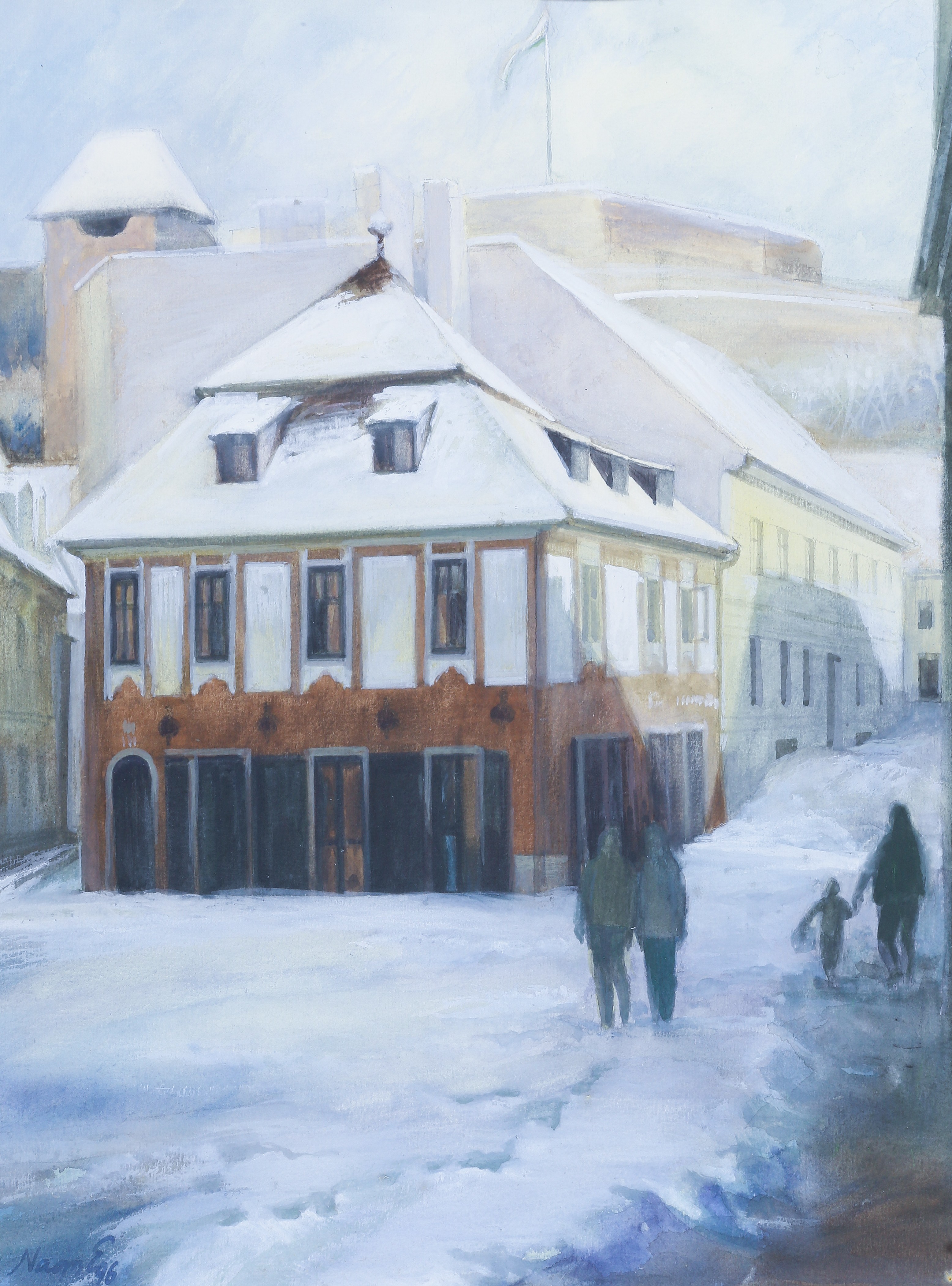
When developing the concept of the exhibition, we placed great emphasis on his oil paintings as well as on his meditative watercolor works, especially on the series made in the 1990s, which immortalizes the emblematic buildings and spaces of the city. In these, the beauty of baroque Eger, the built heritage and worldview of the people of Eger in the past are revealed to us.
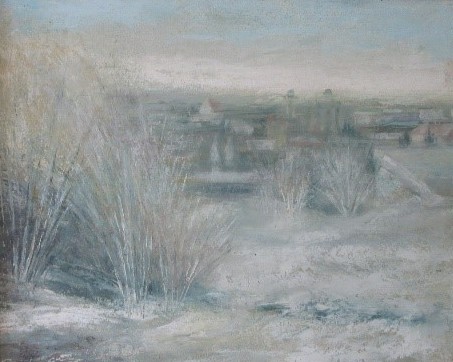
In his early works, the family and the proximity environment provided him with pleasant subjects to paint. Attachment to his own – this basic human attitude – permeated his entire art. The experiences brought by family orientation, the everyday life of peasant life, the man busy with his work and his natural environment, the village, the meadow, then the forest, the waterfront, captured in lyrical, melancholic color harmonies, are the most attractive in his oeuvre. From the beginning, his theme has been Felnémet with its row of cellars, orchards, winter silence, and peace, where the view goes beyond aesthetics. They evoke memories. Memories that fill one's heart with warmth even when the cold winter is creaking, when the landscape is covered in white snow.
|
 |
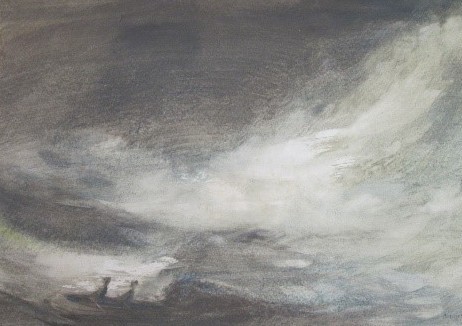
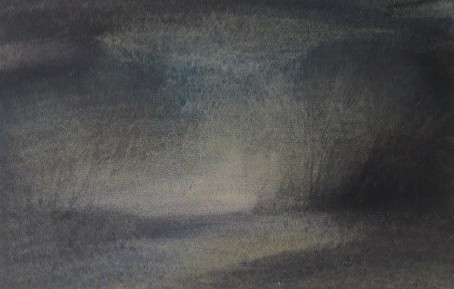
He was a man of few words, with which he could not identify, he ignored it, but he found his voice in nature – he saw into the soul of the sight: he dissected the secrets of the waterfront landscape (the Tisza bank), the forest, the gentle mountains (the Bükk) in his paintings. These works remain naturalistic, while at the same time they are very much saturated with the artist's emotions, his highly ardent pantheistic enthusiasm. Although he painted portraits (mainly of family circles), still lifes, and life events (in his early works), but he mostly sought the silence of the landscape.
The naturalism of these lyrical, often exploring the question of existence, images is not the same as the cold objectivity of hyperrealism, but neither it projects as a naturalist who lives in the fascination of small details. He tries to measure the connections between the essential and the unessential in relation to the whole, as if he were saving the artistic ethics of the first-generation painters of the Nagybánya artist colony, which has eternal validity, for our time. And this is very, very important from the point of view of Hungarian art. His influence lies in his sincerity and simple purity, in a kind of humanistic worldview, in the denial of superficiality, half-solutions, false pathos pseudo-heroism and self-showing. He is a realist, consciously realistic. We can say that he was not among the innovative, but rather among the preserving artistic individuals.
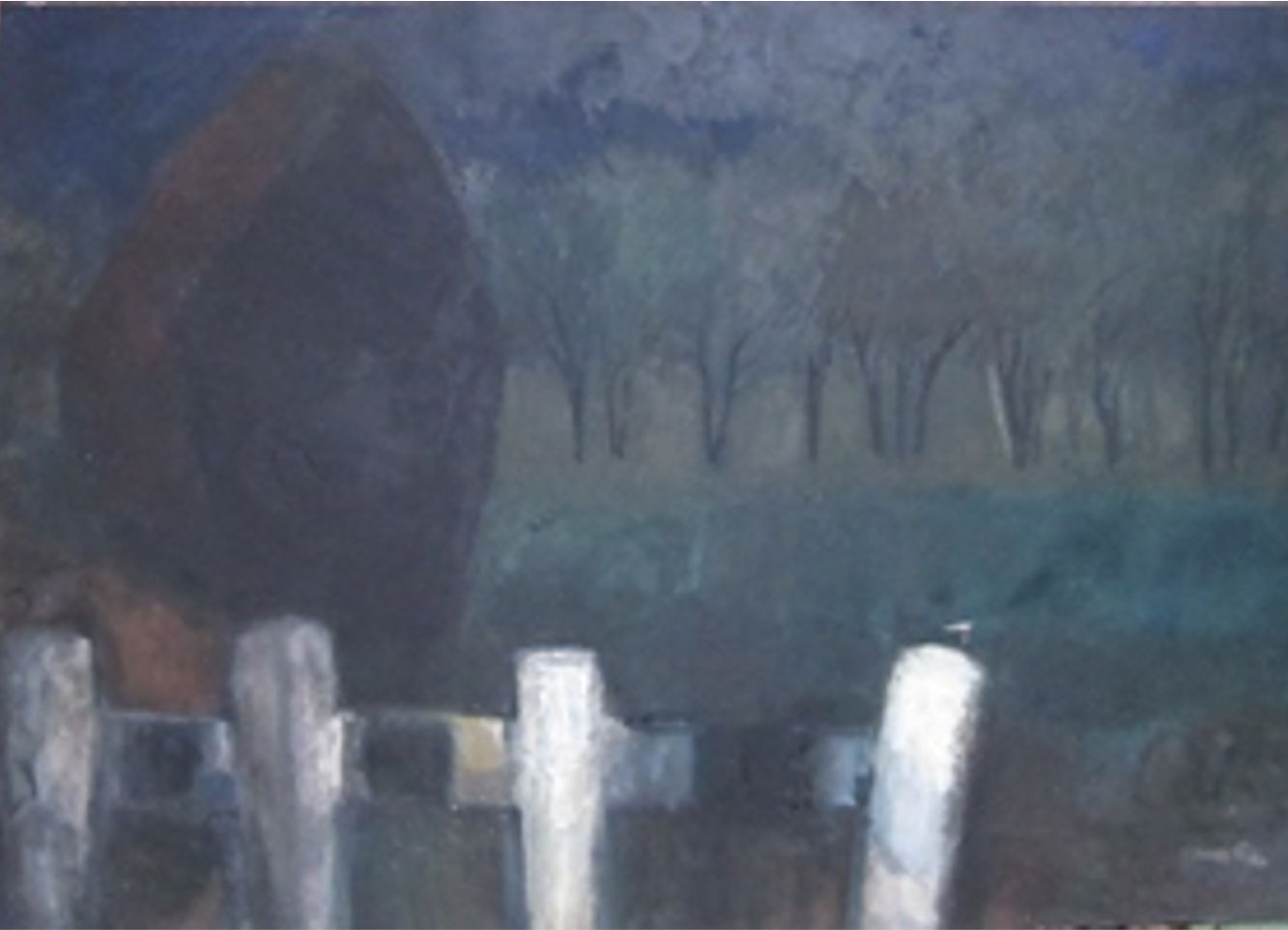
He was never constrained by the isms of the 20th century; he was not absorbed by social realism either. All neurotic gesticulations, visionary poses seeking suggestive effects, were far from his individuality – which are very characteristic symptoms of our 20th-21st century life, and the dominant and forced expression of our art. The fundamental tenet of his Ars poetica was that “nature is so perfect that the painter should be happy and moved if he could recall its phenomena with his paints.” To recall and not to rewrite! Not to transform, for what could be more beautiful than the harmony of form and color of the world we saw? His soul was always refreshed by the great impression, since he painted out of love.
His high level of painterly culture allowed him to convey complex, nuanced changes even in simplicity. His intuitive color world, rich in tones preserving and reflecting moods, and his formal and compositional closure are the outstanding values of his paintings. “This kind of realism stems from an inner order. The depicted world, from the inner order of reality, brought to life by faith in the order of things.” – notes art historian Dr. Gabriella Ludányi about his art.
|
|
Ernő Nagy was born on August 28, 1926 in Felnémet. He came from a poor peasant family, where he learned the honor of work at an early age. His father emigrated to Canada in the hope of a better living, where he wished to take his family with him, but they did not leave their homeland. So finally, after five years, the head of the family bought land, vineyards, a carriage, and a horse here with the money he earned overseas. With this small fortune, his son was able to enroll in a middle school, and then he was sent to the Eger Archbishop's Roman Catholic Teachers' and Cantor Training School. He loved music very much, and was already drawing during this time. His art teacher was Tibor Hamza (1908–1967), who sent one of his works to Miskolc, to the national teacher training exhibition when he was a first-year student, where Rezső Burkhardt, head of the College of Fine Arts and the Miskolc artist colony, was the president. He could have participated in a free one-month artist camp as a prize, but his parents wouldn't let him. His beloved teacher, Dezső Bitter, encouraged him to learn to play the violin instead, and gave him free private lessons. He also learned a lot from Zoli, the gypsy musician of Felnémet, while collecting folk songs in the village.
Almost as a child, he was taken out of the Lyceum Cantor Teachers' High School, and at the age of 18, he was sent to the front as a levente in World War II (November 15, 1944). Without training and adequate ammunition, he was ordered to the firing line to cover the retreat of the Germans. He was taken prisoner of war. He was given a harsh upbringing in the Soviet Union, but this was also a school of life and of art for him. In captivity, he learned about many life situations and also encountered the "great ideology", which he had enough of for life. Nature and art were his safe haven, his refuge, because after the camp cooks and guards discovered that this young prisoner could draw and paint, he received many orders: in addition to portraits, he had to copy the works and landscapes of classical Russian painters (I. I. Shishkin, A. K. Savrasov, I. J. Repin), which activity proved to be a good preliminary study after his return home. He returned home on May 4, 1948, exhausted and emaciated. The cultural policy of communism had ended his previous training as a lyceum cantor teacher, so after four years of absence, he was able to graduate from the Eger State Lyceum Teacher Training Institute in 1949.
The extent to which a world war, the new occupation that followed, and the drastic changes in worldview can influence an individual's life can be traced through Ernő Nagy's life, and it is clear what impact all this would have on his art. The new system did not need the cantor teachers whom he himself, as a young child in Felnémet, respected so much, or from whom he received a lifelong example in the Lyceum. Thus, he was able to fulfill his childhood attraction to fine arts at the Faculty of Fine Arts, studying to be a teacher – with the knowledge he gained during a few weeks of preparatory training at Derkovits Dormitory – after successfully passing the entrance exam. His teachers were: Endre Domanovszky, Gyula Pap, Jenő Barcsay, István Szőnyi, Gyula Hincz, folk art was taught by György Domanovszky, drawing methodology by Jenő Balogh, education by Kálmán Gáborjáni Szabó, art history by Máriusz Rabinovszky, Lajos Végvári, Katalin Dávid and Sándor Ék. His fellow students were: János Szurcsik, Erzsébet Udvardi, Miklós Mazsaroff. Here, as a generation of "bright winds" movement (an attitude that was hardly characteristic of them by the way), the reflection of the aesthetic order inherent in infinite simplicity became a characteristic of almost all of his works without exception. He dared to be faithful to himself, he believed in his own abilities, in the practice that could be acquired, and he had the sensitivity that was necessary to develop his own voice. The influence of István Szőnyi can be detected most clearly in his painting.
|
|
With his college diploma in 1953, he was placed in a teaching position at the teacher training college in Eger, but he did not get any classes, so he ended up in primary school. He got married in 1955, and then, because a church wedding was held in the Eger Basilica, he was banned from all schools in the country. Finally, a convinced communist helped him, the director of the cinema, who was looking for a poster painter. From there, he was later invited to the training school. In 1958, he joined the Drawing Department of the Eger Teacher Training College, next to the head of the department, János Jakuba (1909–1974), who had already won the Munkácsy Prize. By winning membership of the Hungarian Fine Arts Fund, he became a member of the Fészek Club, where he had great cultural experiences. Later, as the Heves County Secretary of the Hungarian Artists' Association, he organized exhibitions that eventually developed into popular national exhibitions. Among other things, together with János Seres, he was involved in the birth of the Eger National Watercolor Biennial exhibition series. In his most active decades, János Blaskó and János Seres were his colleagues at the college, where he was head of department from 1980 until his retirement in 1986. Teachers and artists came out of his hands. His talented students formed lifelong friendships with him: he monitored the careers of his students, helped them, and was involved in the organization of countless exhibitions, and it is no exaggeration to say that his students are still with us today through their works.
His life and work have been linked to Eger and the culture of the city. He has received awards such as the Pro Academia Agriensi (1984) or the Eger City Municipality Award (1994). The Miskolc Regional Group of the Széchenyi Academy of Literature and Art elected him to its ranks in 2011. The appreciation of the people of Eger is indicated by the fact that he was elected as the “Star of Eger” from among numerous candidates in a vote in which every citizen of Eger could participate. He was awarded the Pro Cultura Agriae award by the Municipality of the City of Eger with County Rights, and became an honorary citizen of Eger in 2015. On August 20, 2016, he received the gold degree of the Hungarian Cross of Merit.
He passed away in December 2017.
The Dobó István Castle Museum is paying tribute to the centenary of his birth with an exhibition presenting his oeuvre at the Ziffer Sándor Gallery.
The exhibition can be visited: June 20 – September 27, 2026.